Restore plc
Insider buying + cheap valuation — but a balance-sheet flag
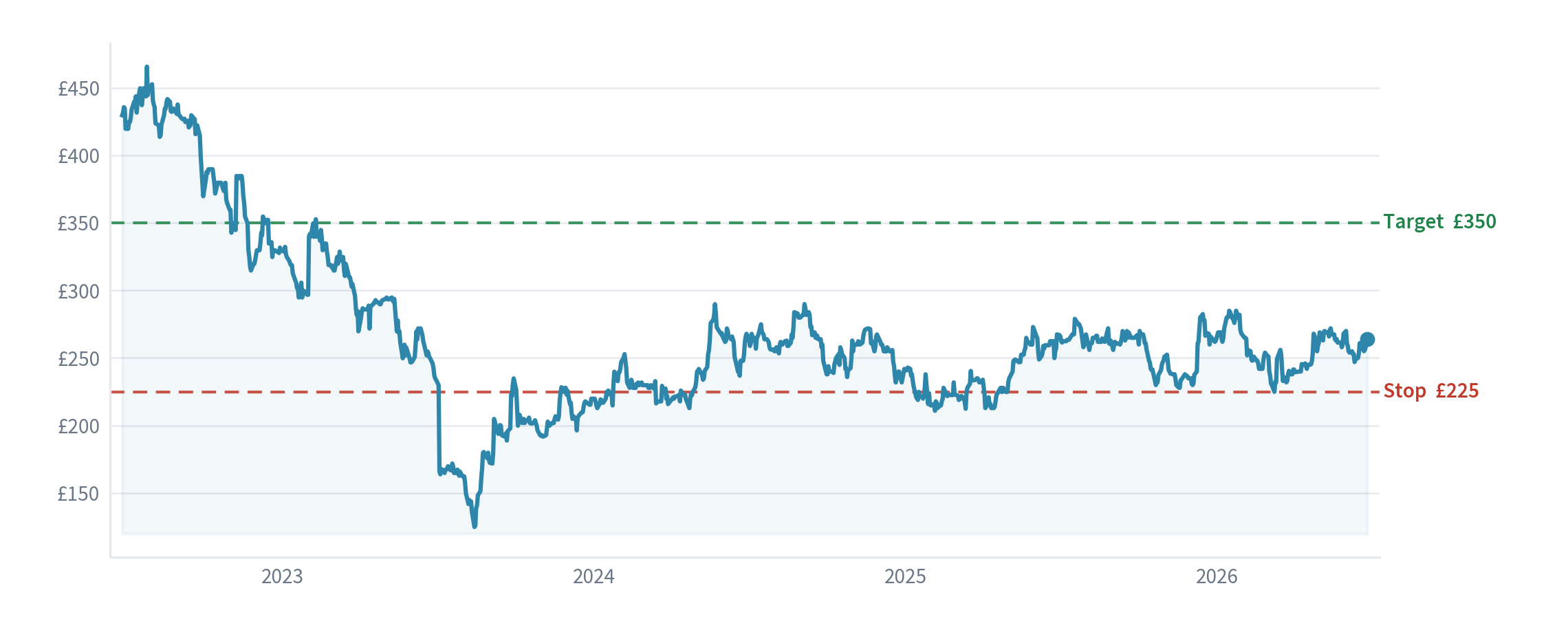
How we would trade it, in plain terms
We are not buying this yet. On the surface it looks like a cheap, good-quality recovery with a director buying — but a look at the accounts found a debt problem big enough that we want to check the loan terms before risking money. So it's held back, not bought.
What the company does
Restore is a UK business that stores and manages companies' physical records and data, securely shreds documents, and runs digital/data services. The revenue is sticky and repeats year after year (customers don't move their archives easily), which is the attractive part.
The idea — and why it's held
It looks cheap and is recovering: it trades around 9–10 times next year's earnings, a director bought shares at 273p, half-year revenue grew about 15%, and it hit its 20% profit-margin target. Against its closest peers that looks very cheap — Iron Mountain, the big records-management company, trades at around 48 times earnings, and Rentokil (business services) around 19 times.
What we think the market is missing — and the catch
The bull case is that the market is too focused on a past stumble and on how messy the accounts look at first glance, and is under-pricing the sticky, recurring revenue and the margin recovery. The catch — found in the accounts — is debt. Restore owes roughly five times its annual profits in borrowings, its short-term bills slightly exceed its readily-available cash, and it made an accounting loss last year. Crucially, that cheap "9–10 times earnings" is flattered by the debt: on a measure that includes the borrowings, it isn't cheap at all. The leverage is why the shares are low, and it directly contradicts the "high-quality" part of the story.
The signal we are acting on
The genuine positive is a director buying shares at 273p — money where their mouth is. But a single insider buy isn't enough to offset a balance-sheet we haven't yet de-risked.
The investor checklist (the proven-investor tests)
- Returns on capital / moat — sticky, recurring revenue (a moat), but last year showed an accounting loss. (mixed)
- Capital allocation — acquisitive (it grows by buying others), which is what built the debt. (a concern)
- Margin of safety — the cheap earnings multiple is flattered by leverage; on a debt-inclusive basis it isn't cheap. (fails this test)
- Cash quality — it does generate real cash that covers its interest. (pass)
- Balance sheet — about 5 times debt-to-profit and tight short-term liquidity. This is the blocker. (fails this test)
- Variant perception + "how could we lose?" — recovery underpriced, but an integration stumble or refinancing squeeze would hurt. (a concern)
- Insider alignment — a director bought at 273p. (pass)
What would make us reconsider
A clean check of the debt: when the loans fall due, what the loan conditions ("covenants") allow, and whether the cash comfortably services them through a downturn. If that all looks safe, this becomes a genuine cheap-recovery candidate. Until then, it's held.
Sources: Restore half-year and full-year results; the director's share purchase; valuation vs Iron Mountain and Rentokil.
Part of an open research-framework experiment — generic research, not a personal recommendation and not advice. The entry, stop and target are the framework's own tracked levels, not instructions or predictions for you. The book is hypothetical (notional money, no trades placed); capital is at risk and past or hypothetical performance is not a reliable indicator of future results. Portfolio Lab is not FCA-authorised. Disclosures & risk →